Description
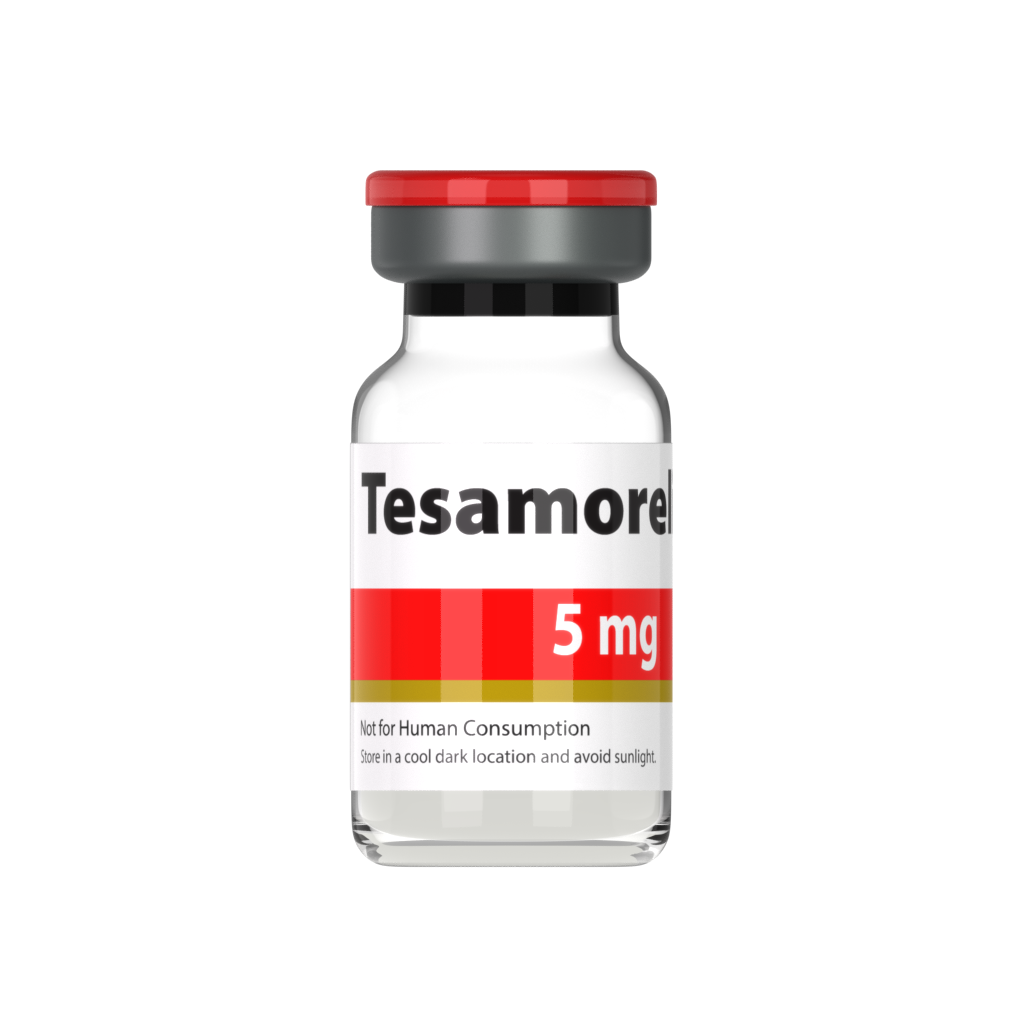
**Tesamorelin Research Overview**
—
**1. What it does**
Tesamorelin is a synthetic peptide that functions as a growth hormone-releasing hormone (GHRH) analog. It stimulates the pituitary gland to produce and release endogenous growth hormone, leading to increased IGF-1 levels. Tesamorelin is specifically noted for its ability to reduce visceral adipose tissue (VAT) in patients, particularly those with HIV-associated lipodystrophy.
—
**2. What are the main reported benefits**
– Reduction of visceral fat, especially in the abdominal area
– Increased natural growth hormone and IGF-1 production
– Improved lipid profiles (reducing triglycerides)
– Enhanced muscle tone and body composition
– Improved cognitive function and memory (under investigation)
– Potential anti-aging and regenerative effects
—
**3. What are its normal applications**
– FDA-approved use for reducing excess abdominal fat in HIV-associated lipodystrophy
– Research into fat loss and body recomposition
– Investigations into cognitive decline and neuroprotection
– Experimental anti-aging studies
—
**4. What are its common side effects**
Reported side effects include:
– Injection site reactions (redness, swelling, pain)
– Mild joint pain or stiffness
– Edema (fluid retention)
– Muscle aches
– Increased blood sugar levels (hyperglycemia)
– Possible hypersensitivity reactions
Most side effects are manageable and dose-dependent.
—
**5. What is the recommended administration or dosage**
– **Typical Dosage**: 2 mg injected subcutaneously once daily
– **Administration Route**: Subcutaneous injection, typically in the abdomen
**Timing:**
– Usually administered at bedtime to align with natural growth hormone secretion patterns
**Preparation:**
– Supplied as a lyophilized powder and must be reconstituted with bacteriostatic water prior to use.
*Note:* Monitoring blood glucose levels may be advisable during prolonged research use.
—